
Grocery Store Software: The Complete 2026 Buyer’s Guide
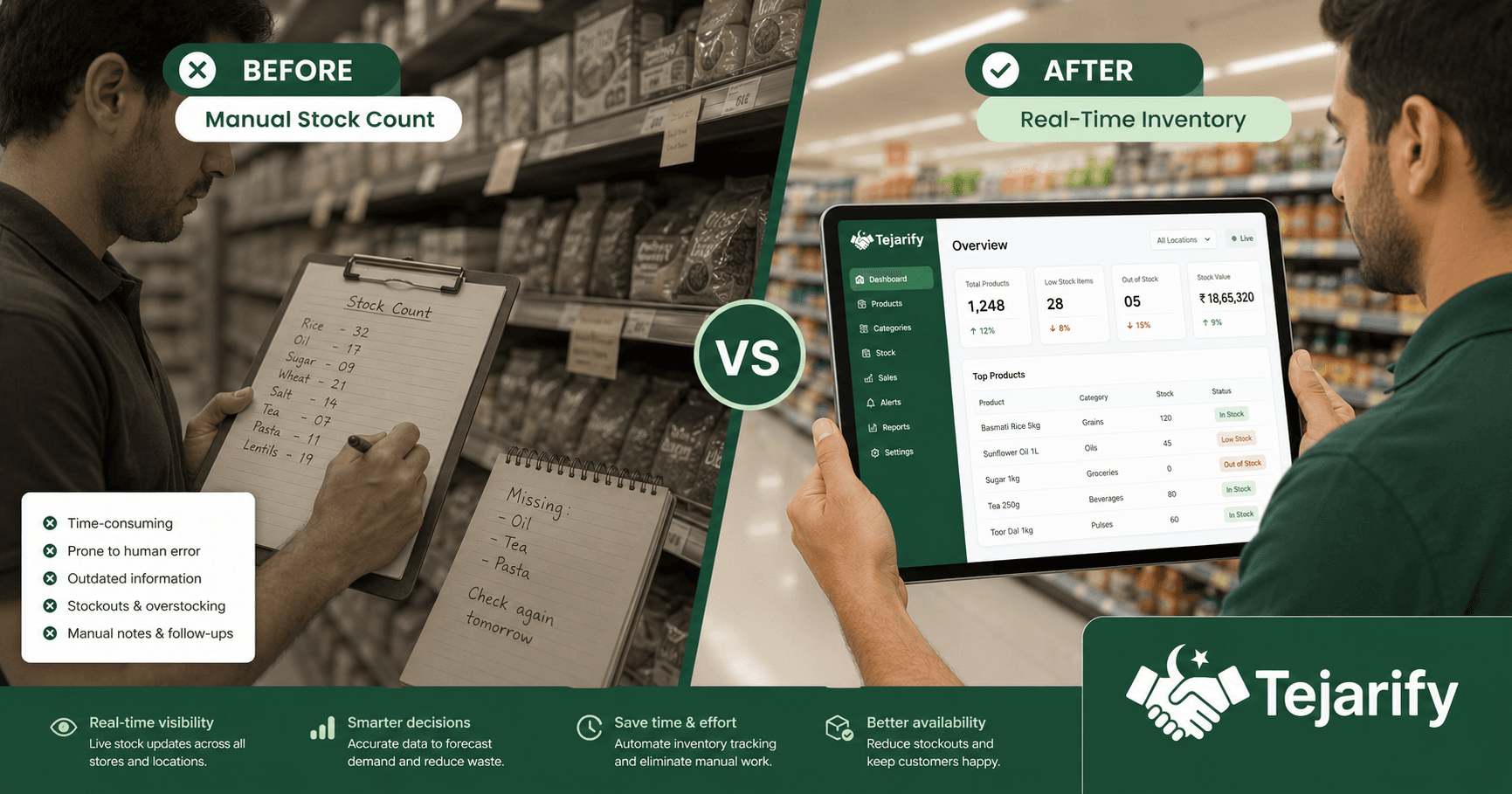
A grocery store lives and dies by three things: how fast the checkout line moves, how accurately stock is tracked, and how little spoils before it sells. Generic retail software wasn’t built for any of that. It doesn’t know what to do with a kilo of onions, doesn’t understand FIFO, and definitely doesn’t talk to […]
A grocery store lives and dies by three things: how fast the checkout line moves, how accurately stock is tracked, and how little spoils before it sells. Generic retail software wasn’t built for any of that. It doesn’t know what to do with a kilo of onions, doesn’t understand FIFO, and definitely doesn’t talk to your weighing scale.
That’s the gap grocery store software is built to close – a system that understands perishables, weighted items, and high-volume checkout as first-class problems, not workarounds.
What Makes Grocery Different From Generic Retail
- High SKU volume. A small grocery store can carry thousands of SKUs across dozens of categories.
- Weighted and variable-price items. Produce, meat, and bulk goods are priced per kilo and need scale integration at checkout.
- Perishability. Every batch has a shelf life. Sell the wrong batch first and you’re writing off spoiled stock.
- High transaction volume, low margin per sale. Speed at the counter directly affects revenue.
Core Features to Look For in Grocery Store Software
FIFO Stock Tracking and Expiry Management
First-in, first-out isn’t optional for perishables. Good grocery software tracks expiry dates at the batch level and automatically prioritizes older stock for sale.
Fast, Barcode-Based Checkout
A system built for grocery needs barcode scanning that works reliably at volume – ideally camera-based scanning so you’re not locked into expensive dedicated scanner hardware for every till.
Multi-Barcode Support (Carton and Unit)
Grocery stock frequently moves between carton and individual-unit sales. Software that only understands one barcode per product creates constant friction at receiving and at the counter.
Weighing Scale Integration
For produce, meat, and bulk items, the POS needs to talk directly to your weighing scale so the final price is calculated automatically.
Real-Time Stock Valuation
Knowing what’s in stock is only half the picture – knowing what it’s worth right now, with FIFO costing applied correctly, is what drives confident reordering decisions.
Tax-Compliant, FBR-Integrated Invoicing
For grocery and supermarket businesses under FBR’s POS integration requirements, software without this built in means a separate compliance project on top of running the store.
How Tejarify Handles Grocery and Food Distribution
Tejarify’s grocery capabilities cover the exact problems above:
- Expiry date and FIFO stock tracking – batches are tracked automatically, so older stock is prioritized without manual tracking.
- Fast barcode-based checkout with camera barcode scanning – any camera-enabled device can act as a scanner.
- Multi-barcode support (carton and unit) – stock received by the case and sold by the unit handled without duplicate product entries.
- Weighing scale integration – connect a scale directly to checkout for accurate per-kilo pricing.
- FBR-integrated invoicing – sales reported to FBR in real time with invoice number and QR code on every transaction.
- Munshi AI – ask your software directly for sales reports, low stock, or yesterday’s performance summary.
For grocery businesses that also supply other shops, Tejarify’s B2B order and invoicing workflow runs in the same system as the retail POS.
Questions Grocery Store Owners Often Ask
Does grocery software need to be different from general retail POS?
Yes, if you carry perishables or weighted items. General POS software has no concept of expiry dates or scale integration, which means staff manage those manually – and manual tracking is where shrinkage and pricing mistakes happen.
Can one system handle both my retail counter and wholesale supply orders?
Tejarify runs retail POS and B2B wholesale ordering in the same account, so stock levels and financial reporting stay unified.
Does it work if my internet connection is unreliable?
Tejarify’s desktop POS is built to keep running offline and sync once connectivity returns.
Is there a free version available?
Tejarify offers a free plan with core Point of Sale, B2B Wholesale, and Advanced Reporting included, plus a 30-day free trial across all modules.
*Tejarify is Pakistan’s all-in-one retail and wholesale management platform. Visit tejarify.com to explore all features.*